How I Reached TOPIK Level 4 in One Year After Coming to Korea
How I Reached TOPIK Level 4 in One Year After Coming to Korea
Every time someone asks how I reached TOPIK Level 4 in about a year, I feel like my answer might disappoint them.
I didn’t have a perfect study plan.
There was no 5 a.m. routine, no perfectly organized vocabulary deck, and no year-long schedule that I followed without missing a day. I skipped study days, forgot words, and some weeks barely studied Korean at all.
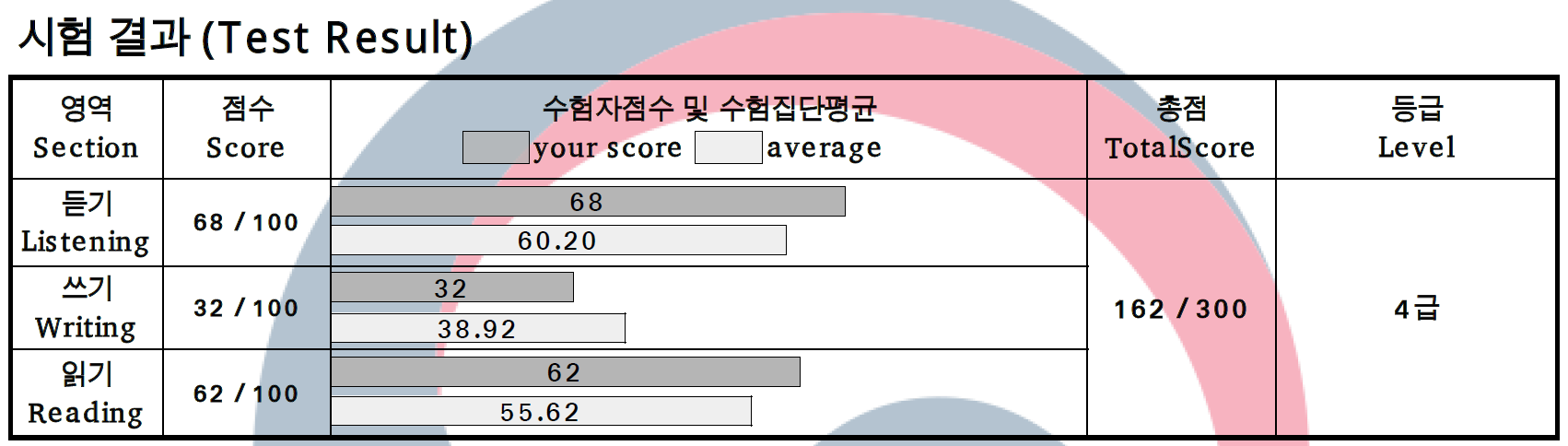
But about a year after coming to Korea, I scored 162 points on TOPIK II and reached Level 4.
That result later became part of my academic journey in Korea, including continuing my studies at Hanyang University.
I didn’t reach TOPIK Level 4 because I had the perfect study plan. I reached it because I kept finding ways to make Korean part of my life.
This isn’t a guide to the perfect way to learn Korean. It’s what actually worked for me — and what I would do differently if I started again.
1. Don’t Chase Streaks — Build Habits
Long before I came to Korea, the first Korean-learning app I downloaded was Duolingo.
I kept a streak of almost 300 days.
It definitely helped me become comfortable with Hangul and some basic vocabulary. But looking back, I sometimes spent more energy protecting the streak than actually understanding Korean.
Things changed when I moved to more structured learning.
I took two Yonsei University courses on Coursera:
- First Step Korean
- Learn to Speak Korean 1
In only a couple of weeks, I felt like I had learned more useful grammar than I had during months of casual app study.
Then, during the weeks before moving to Korea, I stopped studying almost completely.
And I forgot more than I expected.
That taught me something important:
Use apps like Duolingo to build the habit of learning Korean, but don’t make them your entire learning system.
Once you’re comfortable with Hangul and basic vocabulary, move toward structured grammar, beginner reading, listening, and real Korean.
A streak tells you how often you opened an app.
It doesn’t necessarily tell you how much Korean you can actually use.
2. Let Real Life Do Some of the Teaching
The moment I arrived in South Korea, Korean stopped being something I studied only when I opened a textbook.
It was suddenly everywhere.
Ordering food.
Reading signs.
Buying groceries.
Understanding announcements.
Talking to people.
At university, I attended Korean classes and studied with:
- Active Korean 1 & 2
- Korean Grammar in Use – Beginner
I also gave myself a simple target:
Learn 10 new Korean words every day.
For almost an entire semester, I managed to keep doing it.
Eventually, life became busy and that routine disappeared.
But something interesting happened.
My Korean didn’t stop improving.
I was still hearing Korean every day.
I was still reading signs.
I was still trying to communicate.
And I kept encountering grammar and vocabulary I had studied before.
Not following a study routine consistently isn’t necessarily the same as not learning.
If you’re already living in Korea, your surroundings can become part of your language education — if you pay attention to them.
3. Use Vocabulary — Don’t Just Memorize It
If I could go back and change one part of my Korean study, it would be the way I learned vocabulary.
My old approach was straightforward.
Learn 10 words today.
Remember maybe six tomorrow.
Remember one or two a week later.
I kept trying to memorize more vocabulary without giving myself enough chances to actually use it.
The problem wasn’t simply memory.
It was repetition in context.
A vocabulary word really starts becoming yours when you’ve seen it, heard it, and used it multiple times.
Now, if I learn a new Korean word, I think a much better approach is:
- Write your own sentence using the word.
- Say that sentence aloud.
- Try to use the word in conversation.
- Pay attention when you encounter it again naturally.
One of the best moments in language learning is studying a word in a book and then suddenly hearing a Korean person use exactly that word in real life.
That’s often when it finally sticks.
4. Immerse Yourself Beyond the Textbook
Some of my most useful Korean learning happened outside class.
I joined my university’s buddy program.
I went to church partly because it gave me more opportunities to meet and speak with Korean people.
I also worked part-time at a tteokbokki restaurant.
That job taught me a completely different kind of Korean.
Customers don’t speak like textbook listening exercises.
Coworkers don’t always slow down because you’re learning.
People speak quickly.
They shorten words.
They interrupt each other.
They use expressions you may never have seen in a textbook.
At first, I understood very little.
But after repeatedly hearing the same kinds of conversations, things slowly started making sense.
That experience changed how I thought about speaking Korean.
You don’t need to become good at Korean before you start speaking. Speaking is one of the things that eventually makes your Korean better.
You’re going to make mistakes.
You’re going to misunderstand people.
Sometimes you’ll say something completely different from what you intended and feel embarrassed afterward.
That’s part of the process.
Some of the Korean expressions I remember best are connected to situations where I made mistakes.
5. My First TOPIK Exam
Eventually, I registered for the 102nd TOPIK I.
I didn’t prepare intensively for it.
My main goal was simply to experience the exam.
I wanted to understand:
- what the test environment felt like,
- how quickly the questions moved,
- how nervous I would become,
- and whether my everyday Korean actually translated into exam performance.
The test felt more manageable than I expected.
I scored 189 points.
That result gave me confidence.
TOPIK II suddenly didn’t feel impossible.
6. Treat AI Like a Tutor, Not Just a Translator
One of the tools that helped me most while learning Korean wasn’t a traditional textbook.
It was AI.
But I didn’t use AI simply to translate Korean into English.
Whenever I found a word or grammar pattern I didn’t understand, I kept asking follow-up questions.
For example:
- What does this word actually mean?
- Is it formal or casual?
- Would Koreans naturally use this in conversation?
- How is it different from a similar Korean word?
- Give me five natural example sentences.
- Break this sentence down word by word.
- Why is this grammar ending used here?
- Is the sentence I wrote natural?
- Translate my Korean sentence back into English.
That last technique helped me a lot.
If the English translation didn’t match what I was trying to say, it usually meant I hadn’t fully understood the Korean grammar yet.
The most useful part of learning with AI isn’t receiving the first answer. It’s asking enough follow-up questions to actually understand the answer.
That habit probably saved me a lot of time.
7. Preparing for TOPIK II
When I registered for the 104th TOPIK II, I thought I would suddenly become extremely disciplined.
That didn’t happen.
Instead, I continued doing many of the things that had already been helping me:
Speaking whenever I could.
Listening to natural Korean conversations.
Paying attention to expressions people actually used.
Watching Korean dramas.
And continuing structured study when I had time.
For formal study, I used:
- Seoul National University Korean 3A–4B
- Free Korean grammar classes offered through church
The biggest change happened during the final month before TOPIK II.
That’s when I started concentrating heavily on the writing section.
Two YouTube resources were particularly useful for understanding TOPIK writing:
- WABOM TOPIK
- Professor Yoon’s Korean Language Class
Before that, I knew Korean grammar.
But knowing Korean and knowing how TOPIK writing is graded are two different things.
Learning the exam structure made a big difference.
8. What Actually Happened on TOPIK Exam Day
Reading Moves Faster Than You Expect
I had practiced with previous TOPIK papers, so the format wasn’t unfamiliar.
But I still nearly ran out of time.
That taught me that TOPIK reading isn’t only testing Korean.
It’s also testing how efficiently you can use the Korean you already know.
Sometimes the clock is a bigger opponent than the question itself.
If one question is consuming too much time, move on and return to it if you can.
For Writing, I Divided My Time by Difficulty
My approximate strategy was:
Question 51: around 10 minutes
Question 52: around 10 minutes
Questions 53 and 54: most of the remaining time
I didn’t memorize a strict essay template.
I mostly relied on my own writing flow.
It worked, but if I took TOPIK again, I would probably prepare a loose structure beforehand.
Not something to memorize word-for-word.
Just enough structure so I wouldn’t have to make every decision while under exam pressure.
For Listening and Reading, I Tried to Look Ahead
During listening, I tried to read the question and answer choices before the important part of the audio played.
During reading, I often looked at what the question was asking before carefully reading the whole passage.
That gave me something specific to search for instead of simply trying to understand every sentence.
There Was No Perfect Exam-Day Routine
I didn’t have a special ritual.
I was nervous.
I simply told myself to do my best, walked into the exam room, and used what I had practiced.
When the result came out, I had scored:
162 points — TOPIK Level 4
It wasn’t a perfect score.
But it showed me how far I had come within roughly one year of living and learning Korean.
And that Korean ability later became part of my path toward continuing my education at Hanyang University.
If I Started Learning Korean Again
Knowing what I know now, I would keep things much simpler.
- Use every new word in your own sentence instead of only memorizing vocabulary lists.
- Start speaking Korean before you feel ready.
- Ask questions until you genuinely understand a grammar point.
- Listen to natural Korean every day, even if you understand only part of it.
- Review old material instead of constantly searching for new resources.
- Stick to one or two good textbook series instead of collecting everything.
- Practice TOPIK past papers under real time pressure.
- Don’t ignore the writing section.
- Use AI to understand Korean rather than simply translate it.
- Find ways to make Korean part of your everyday life.
Most importantly:
Consistency doesn’t mean following your routine perfectly every day. It means continuing even after the routine breaks.
My Korean-learning journey wasn’t perfectly organized.
I forgot words.
I stopped routines.
I skipped study days.
I misunderstood people.
I made embarrassing mistakes while speaking.
But within roughly a year after coming to Korea, I reached TOPIK Level 4.
And that became one more step in my journey toward Hanyang University.

If you’re learning Korean because you want to study or build a life in Korea, don’t wait until you have the perfect study plan.
Start with what you have.
Use the language.
Make mistakes.
And keep going.
Frequently Asked Questions
Can you reach TOPIK Level 4 in one year?
It is possible. In my case, I reached TOPIK Level 4 roughly one year after coming to Korea. Living in Korea gave me daily exposure, but structured grammar study, speaking, listening, vocabulary practice, and TOPIK-specific preparation all contributed.
What books did I use to learn Korean?
I used Active Korean 1 & 2, Korean Grammar in Use – Beginner, and later Seoul National University Korean 3A–4B, alongside Korean classes and everyday exposure.
How did I prepare for TOPIK II?
I practiced previous TOPIK questions and focused heavily on writing during the final month. WABOM TOPIK and Professor Yoon’s Korean Language Class were particularly useful for understanding how the writing section works.
Do international students need TOPIK to study in Korea?
It depends on the university and program. Korean-taught programs commonly have Korean-language requirements, while many English-track programs use English-language requirements instead. Always check the exact admission requirements of the university and program you are applying to.
Does living in Korea automatically make your Korean better?
Not automatically. What helped me was actively using the environment: speaking with people, paying attention to signs and expressions, joining activities, and finding situations where I needed to use Korean.
About the Author
Sanjog Pandey is an international student in South Korea. After coming to Korea, he progressed to TOPIK Level 4 within approximately one year through a combination of formal Korean classes, self-study, everyday immersion, and TOPIK-focused preparation. He later continued his academic journey at Hanyang University.
Planning to Study in South Korea?
Korea Connect helps international students understand university options, admission requirements, scholarships, documentation, and study pathways in South Korea.
Whether you are considering an English-taught program or a Korean-track degree, having the right preparation can make the process much clearer.
Contact Korea Connect for a profile assessment and university options suited to your academic background.
Share this article
Help fellow students discover this guide
Related Reading
Planning to Study in Korea from India?
Our permanent team in South Korea provides end-to-end support for Indian students — from university selection to visa and airport pickup.
Message us on WhatsApp →